Antonio Squicciarini

Multiscale Time-Series Feature Extraction Using Entropic & Informational Functionals
This project proposes a general-purpose methodology to transform time series into interpretable sequences of entropic and information-theoretic features. The method is designed for anomaly detection and time-series characterization in domains such as fault monitoring, EEG seizure detection, and more.
The approach combines:
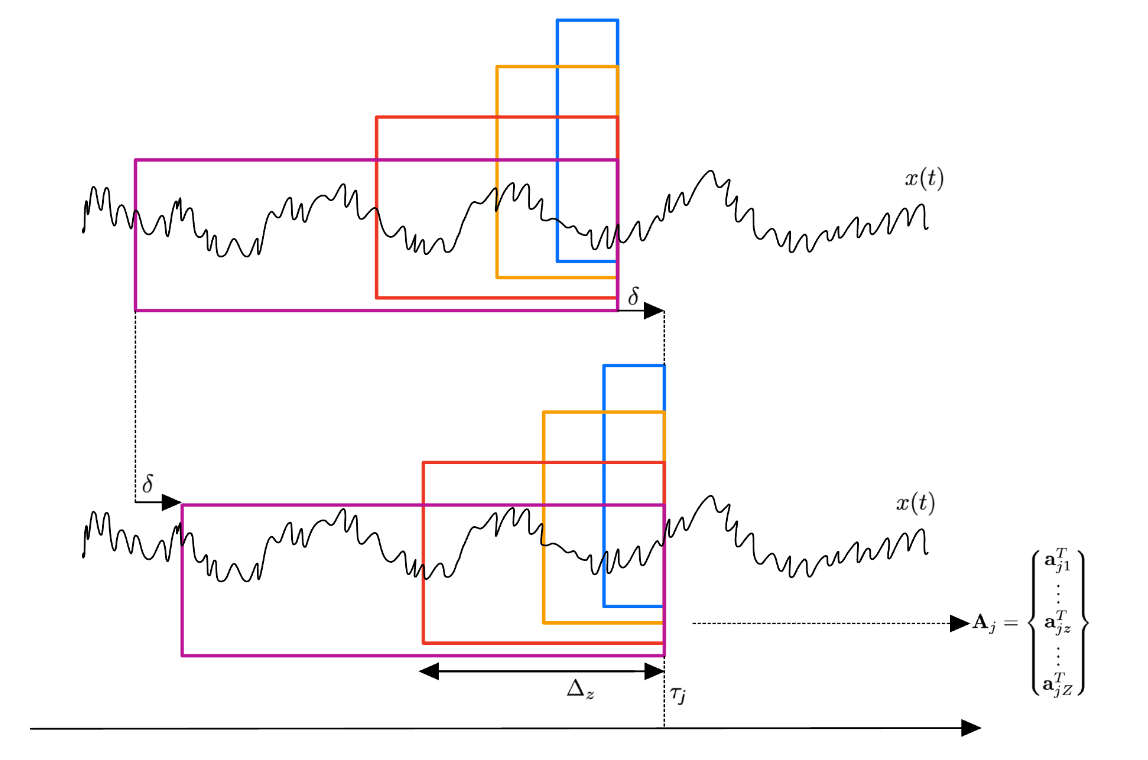
- Multiscale overlapping windows
- Non-parametric Kernel Density Estimation (KDE)
- Adaptive bandwidth optimization using Jensen–Shannon Divergence (JSD)
- A library of continuous entropic and informational measures (e.g., Shannon, Tsallis, Rényi, Fisher Information)
Why This Matters
Entropy and information measures provide a rich, continuous description of signal complexity, uncertainty, and structure — essential for detecting subtle or time-localized anomalies. Our method optimizes the transformation parameters and builds a scale-adaptive, windowed representation of the signal.
Method Overview
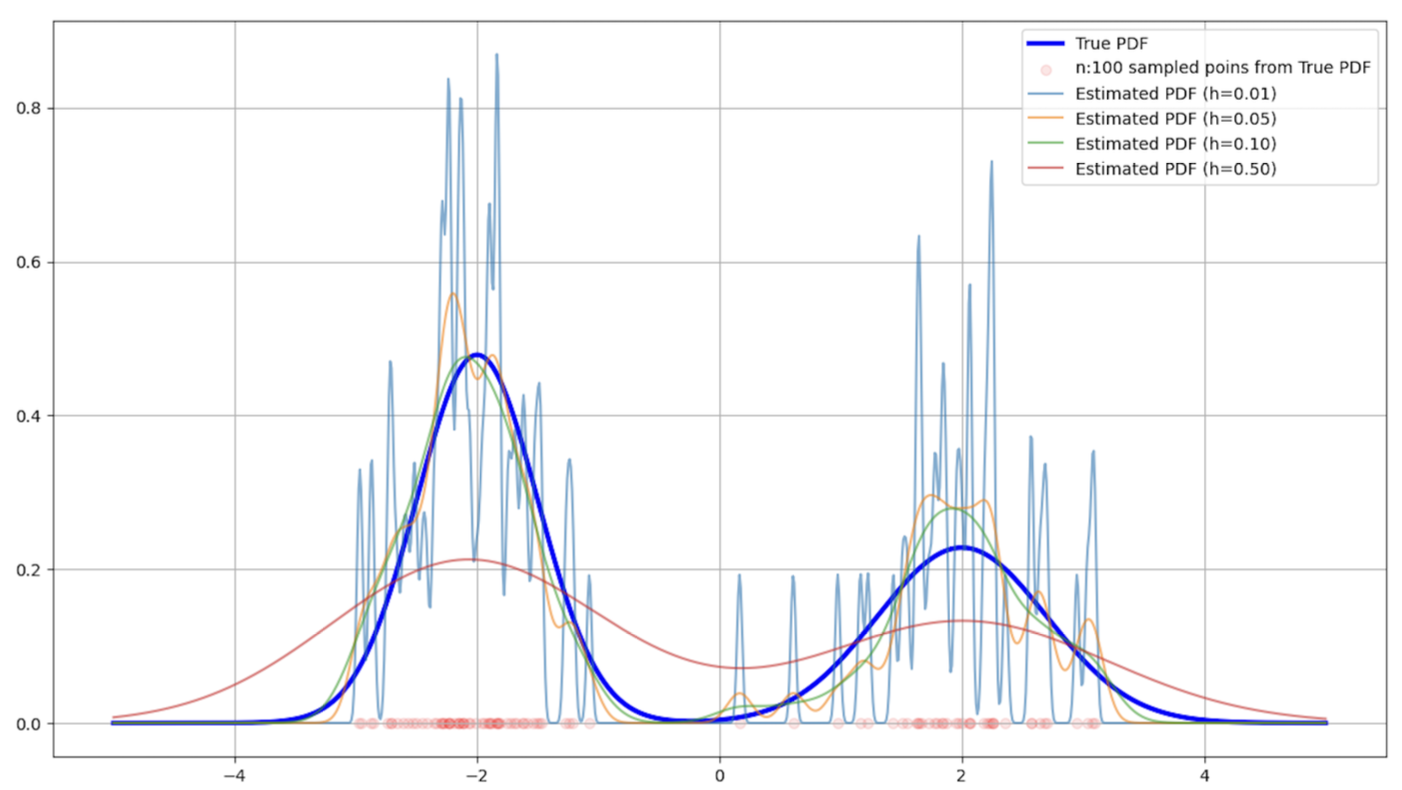
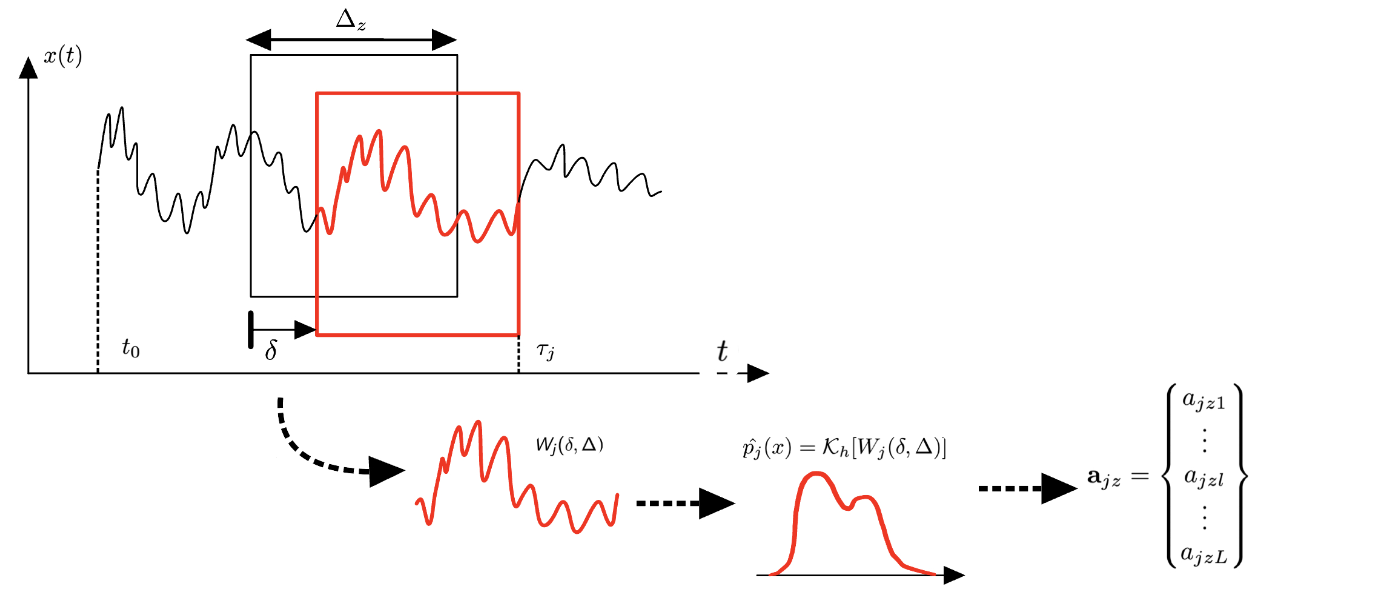
The methodology applies KDE to windowed segments of the time series at multiple scales, producing a sequence of PDFs. Then, various entropy-based features are computed for each PDF. The bandwidth is optimized offline using JSD, ensuring minimal bias and variance.
A modular pipeline applying KDE, JSD-based optimization, and entropic feature extraction over multiscale overlapping windows.
Synthetic Signal with Contextual Anomaly
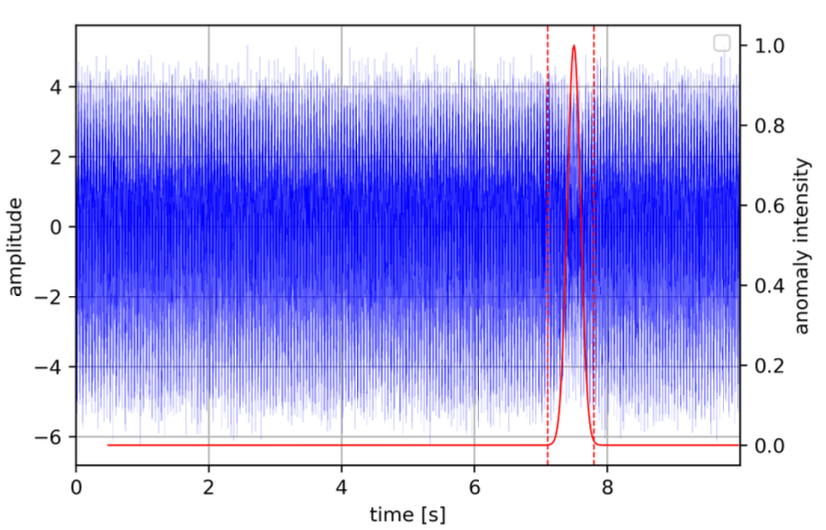
We generate a synthetic signal that transitions from a normal to an anomalous regime using added frequency components. The anomaly is detected by shifts in entropy and information content.
A designed synthetic signal where harmonic content shifts during the anomaly window.
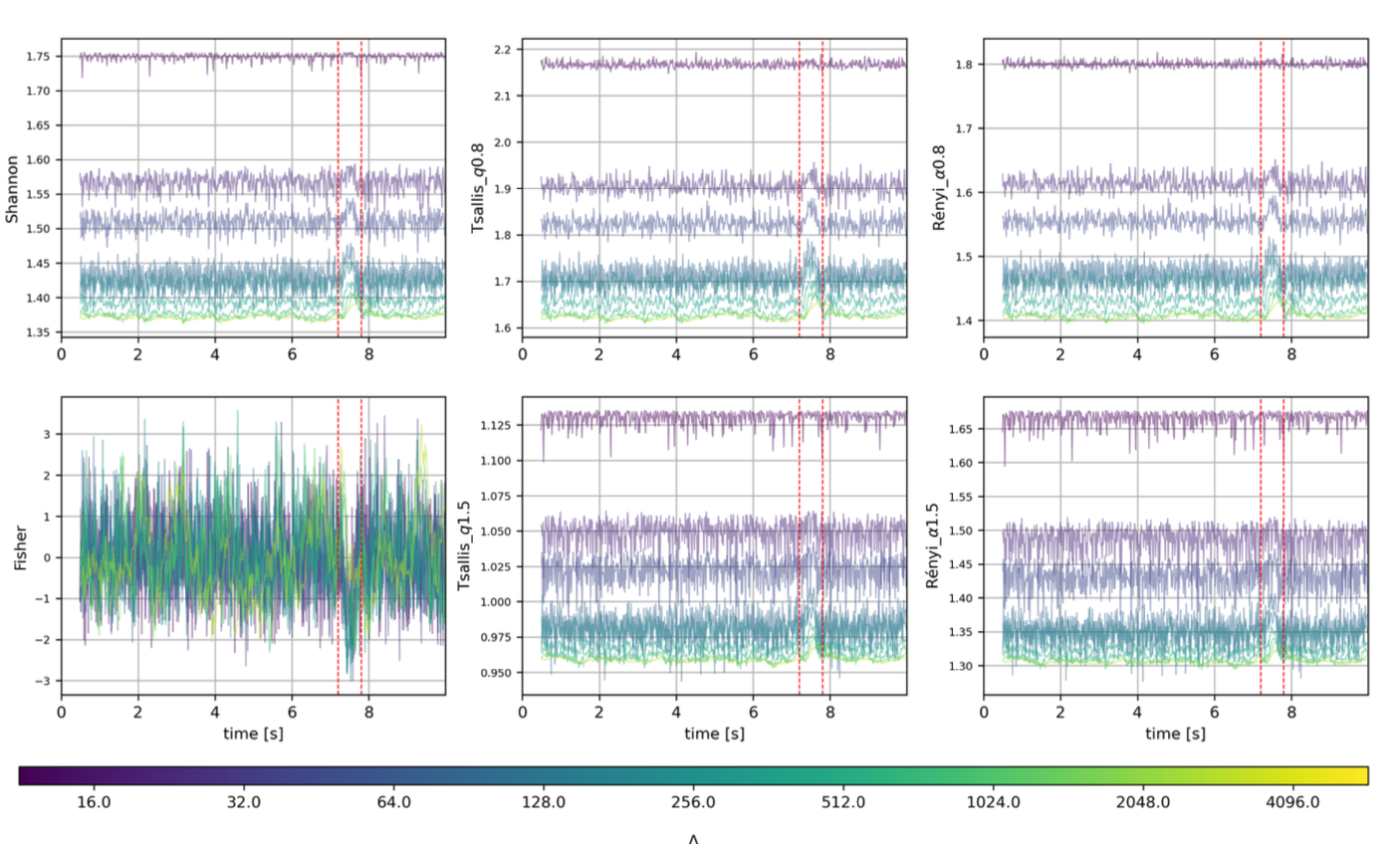
Multiscale Feature Plots
We visualize the extracted features across different window sizes and time indices.
Multiscale entropy and Fisher information curves over time. Anomalies manifest as sudden drops in information and spikes in entropy.
Real Application: EEG Seizure Detection
The methodology was applied to scalp EEG signals from the CHB-MIT database. The results show that seizures trigger consistent, multi-scale changes in the extracted features.

EEG signal before seizure: healthy baseline.
Entropy and information functionals capturing the seizure onset across scales.
Final Validation
To ensure interpretability, we also plotted the PDFs generated at different scales and bandwidths to visualize how KDE transforms signal windows before entropy evaluation.
Grid of PDFs for anomaly and normal signals across scales and bandwidths, showing clear contrast.
Related Publication
Squicciarini, A., Valero Toranzo, E., Zarzo, A.
A Time-Series Feature-Extraction Methodology Based on Multiscale Overlapping Windows, Adaptive KDE, and Continuous Entropic and Information Functionals,
Mathematics, vol. 12, 2396, 2024.
📎 https://doi.org/10.3390/math12152396
Source Code Repository
The full implementation of this methodology—including data generation, KDE-based transformation, entropy computation, and model training—is available on GitHub:
GitHub Repository: https://github.com/antosquicciarini/tsad_eic